Case Study 202
Applying Re-New Your Mind in a Healing Therapy Model
Inspired by the Wisdom of the Tao Te Ching
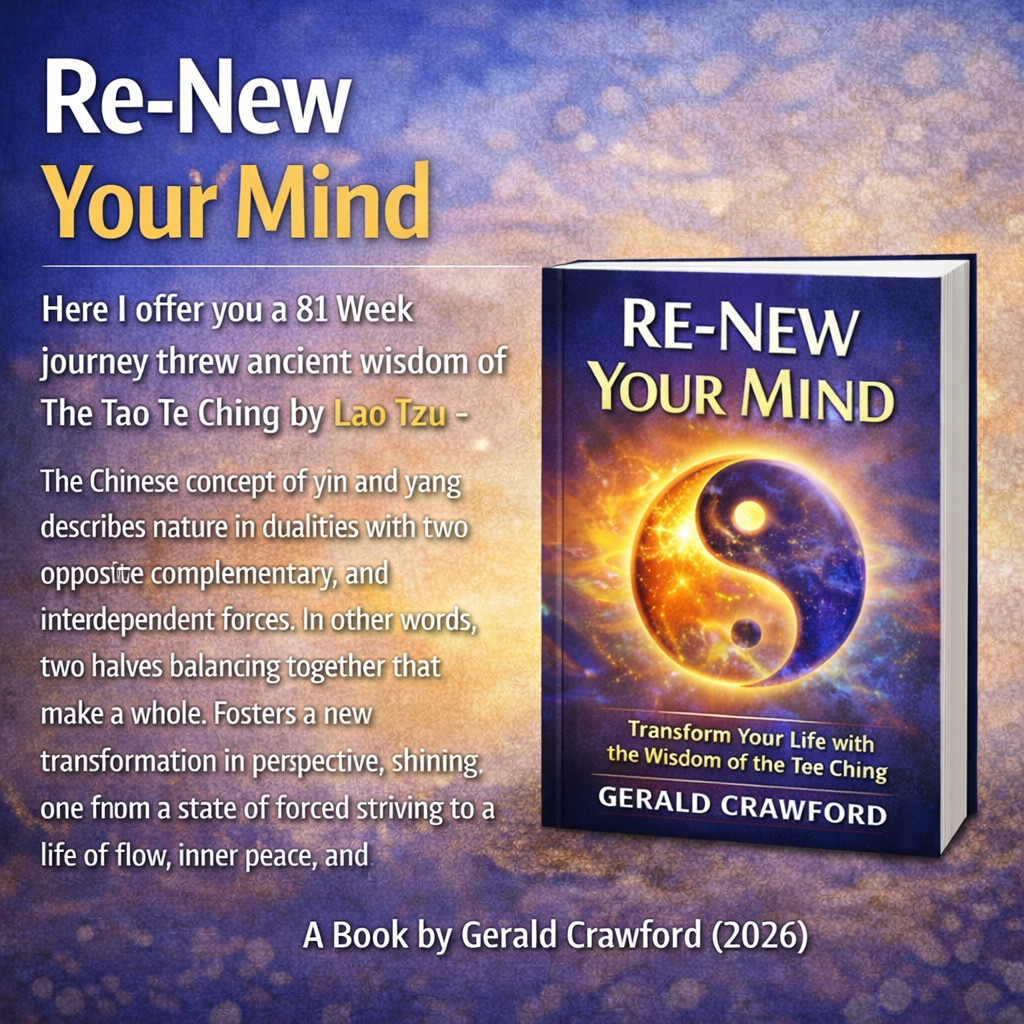
Book: Re-New Your Mind
Author: Gerald Crawford (2026)
Overview
This case study explores how insights from Re-New Your Mind, based on the ancient philosophy of the Tao Te Ching by Lao Tzu, can be applied within a healing therapy model to support emotional resilience, perspective renewal, and personal balance.
The approach focuses on integrating Taoist principles—such as yin and yang balance, acceptance, mindful awareness, and harmonious action—to help individuals navigate emotional challenges and restore a sense of inner equilibrium.
Client Background
Client Profile:
Female, age 34
Occupation: Healthcare worker
Presenting Challenges:
-
Emotional exhaustion and burnout
-
Feeling overwhelmed by responsibility
-
Difficulty maintaining personal boundaries
-
Loss of personal balance between work and rest
The client expressed feeling as though she was constantly giving energy to others while neglecting her own well-being.
Presenting Problem
During initial sessions, the client reported:
-
Persistent fatigue and emotional depletion
-
Difficulty saying “no” to additional responsibilities
-
Feeling disconnected from personal needs and self-care
-
A sense of imbalance between caring for others and caring for herself
This pattern reflected a strong yang energy (constant action and giving) with very little yin energy (rest, reflection, and restoration).
Therapeutic Framework
The therapy model incorporated reflections from Re-New Your Mind, structured around five core principles derived from Taoist wisdom:
-
Awareness and Self-Observation
-
Balancing Yin and Yang
-
Acceptance of Natural Limits
-
Cultivating Stillness and Reflection
-
Restoring Harmonious Living
Each stage involved guided discussion, journaling, and reflective exercises.
Stage 1: Developing Awareness
The client was encouraged to observe her daily patterns of energy use, noting when she felt drained versus when she felt balanced.
Through reflection exercises inspired by Taoist teachings, she began identifying how constant responsibility had led to a pattern of self-neglect.
Outcome:
The client became aware that her burnout was not only due to workload but also her inability to create balance between giving and restoring energy.
Stage 2: Restoring Yin–Yang Balance
The concept of yin and yang was introduced as a model for understanding healthy life balance.
Examples explored included:
-
Giving and receiving
-
Work and rest
-
Action and reflection
-
Caring for others and caring for oneself
The client was encouraged to intentionally create time for restorative activities.
Outcome:
She began scheduling periods of rest and personal reflection during the week.
Stage 3: Accepting Natural Limits
A core teaching from the Tao Te Ching emphasizes recognizing natural limits and avoiding excess.
The client explored the idea that constantly pushing beyond personal limits can disrupt balance and lead to emotional depletion.
Therapeutic discussions focused on:
-
Healthy boundaries
-
Self-compassion
-
Accepting that rest is necessary for sustainability
Outcome:
The client reported feeling less guilt about taking time for herself.
Stage 4: Practicing Stillness
The therapy model introduced brief daily practices to cultivate mental stillness.
These included:
-
Quiet breathing exercises
-
Reflective journaling
-
Observing emotions without judgment
These practices helped the client reconnect with her internal state rather than remaining constantly focused on external demands.
Outcome:
She experienced moments of calm and increased emotional clarity.
Stage 5: Living in Harmony
As therapy progressed, the client began integrating Taoist principles into daily life.
She practiced responding thoughtfully rather than automatically accepting additional responsibilities.
This shift helped restore balance between caring for others and maintaining personal well-being.
Outcome:
The client reported improved energy levels, healthier boundaries, and a renewed sense of balance.
Results
After applying the Re-New Your Mind therapeutic framework, the client experienced:
-
Reduced emotional exhaustion
-
Improved work-life balance
-
Increased awareness of personal needs
-
Greater ability to set boundaries
-
A stronger sense of inner calm
Key Insight
The client realized that true care for others requires maintaining balance within oneself.
By understanding the natural rhythm of yin and yang, she learned that rest and reflection are not weaknesses but essential components of sustainable well-being.
Therapeutic Implications
This case demonstrates how Taoist philosophical principles can support therapeutic interventions by encouraging:
-
Emotional self-awareness
-
Healthy boundaries
-
Balanced energy management
-
Compassion toward oneself and others
Conclusion
The teachings reflected in Re-New Your Mind provide a meaningful framework for healing and personal growth.
By applying the ancient wisdom of the Tao Te Ching, individuals can gradually move from states of exhaustion and imbalance toward renewed clarity, harmony, and sustainable well-being.


Recent Comments