Development of the Re-New Your Mind Therapy and Healing Model (TAO Model)
A Holistic Mind–Body–Spirit Healing Framework
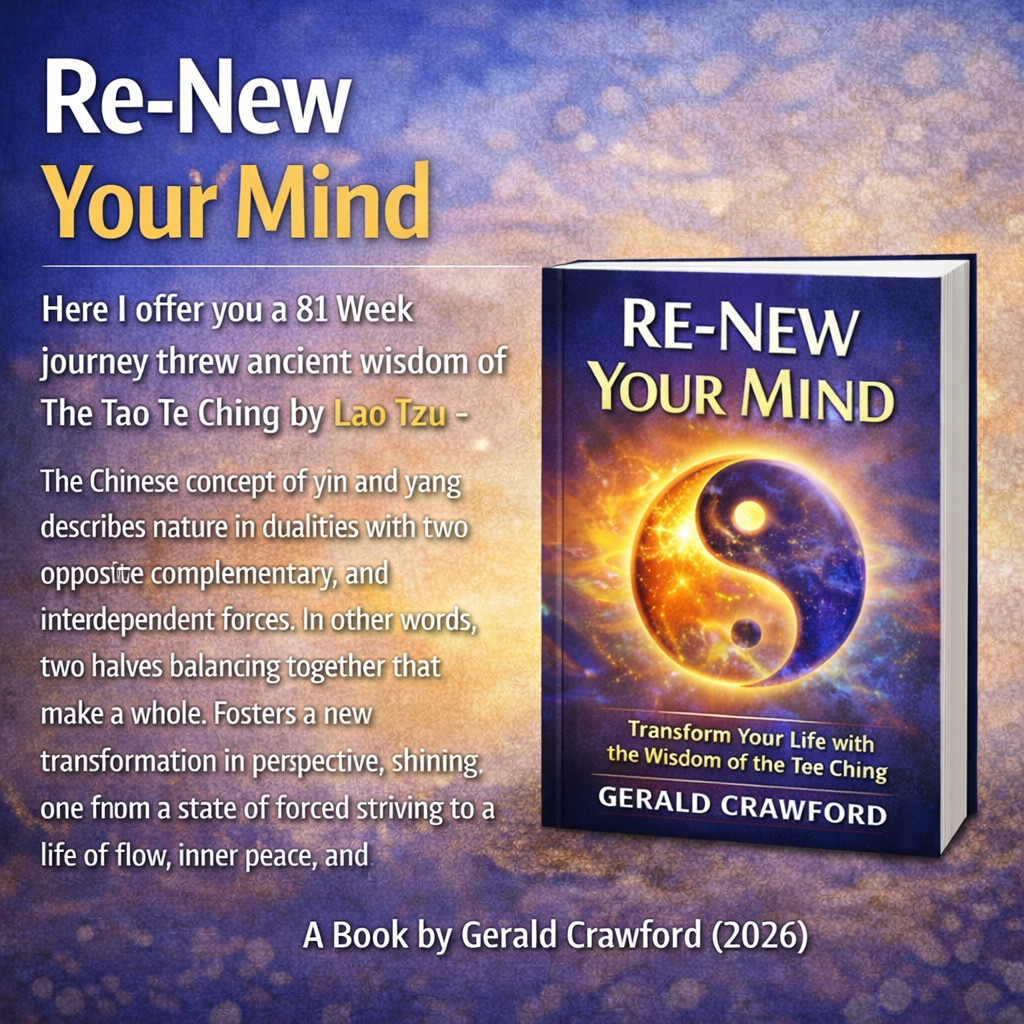
Model Name: Re-New Your Mind Therapy and Healing Model (TAO Model)
Founder: Gerald Crawford
Philosophical Foundation: Wisdom of the Tao Te Ching by Lao Tzu
Supporting Methods: EFT (Emotional Freedom Technique), reflective awareness, mind–body regulation
Introduction
The Re-New Your Mind Therapy and Healing Model (TAO Model) is a holistic healing framework developed to support emotional, psychological, and personal transformation through the renewal of the mind and restoration of internal balance.
The model is inspired by the timeless teachings of the Tao Te Ching, which emphasize balance, harmony, natural flow, and the interconnectedness of life.
By integrating Taoist philosophical insight with practical healing techniques such as EFT tapping, reflective awareness, and emotional regulation practices, the TAO Model provides a structured pathway for healing and transformation.
The model recognizes that many emotional struggles arise when individuals become disconnected from the natural balance between thought, emotion, body, and life experience.
The purpose of the TAO Model is to restore that balance and guide individuals toward clarity, harmony, and inner peace.
Philosophical Foundations of the TAO Model
The development of the model draws from several key principles found within Taoist philosophy.
The Principle of the Tao (The Way)
The Tao represents the natural order and flow of life.
According to Taoist teachings, well-being arises when individuals align themselves with the natural rhythm of life rather than attempting to control every outcome.
In therapeutic terms, this principle encourages individuals to shift from force and resistance toward awareness and flow.
Yin and Yang Balance
The Taoist concept of yin and yang represents complementary forces that create balance and harmony.
Examples include:
- Effort and rest
- Action and stillness
- Strength and softness
- Thinking and feeling
The TAO Model recognizes that emotional distress often arises when this balance becomes disrupted.
Healing involves restoring equilibrium between these forces.
The Principle of Wu Wei (Effortless Action)
Wu Wei refers to acting in alignment with life rather than forcing outcomes.
In the therapeutic context, this principle encourages individuals to respond thoughtfully rather than react impulsively.
It promotes a calm and balanced approach to life’s challenges.
Core Components of the TAO Model
The Re-New Your Mind TAO Model integrates three essential dimensions of healing.
1. Cognitive Renewal
This dimension focuses on transforming thought patterns.
Through reflection and awareness, individuals begin recognizing:
- limiting beliefs
- fear-based thinking
- negative self-perception
- habitual emotional reactions
Renewing the mind allows individuals to adopt more balanced perspectives.
2. Emotional Healing
The model emphasizes emotional awareness and acceptance.
Rather than suppressing emotions, individuals learn to observe and process them with compassion.
Techniques such as EFT tapping support emotional regulation and reduce psychological distress.
3. Mind–Body Integration
The TAO Model recognizes the connection between emotional experiences and physiological responses.
Stress and emotional tension can manifest physically through nervous system activation.
Mind–body practices such as breathing techniques, tapping, and mindfulness help restore balance within the body.
The Seven Stages of the TAO Healing Process
Stage 1 – Awareness
The healing journey begins with awareness.
Individuals learn to observe their thoughts, emotions, and behavioral patterns without judgment.
Awareness creates the foundation for transformation.
Stage 2 – Recognition of Imbalance
At this stage, individuals identify areas of imbalance in their lives.
These imbalances may appear as:
- emotional overwhelm
- excessive control
- chronic stress
- avoidance behaviors
Understanding imbalance helps guide the healing process.
Stage 3 – Acceptance
Acceptance involves acknowledging emotional experiences rather than resisting them.
When individuals stop fighting their internal experiences, emotional tension begins to decrease.
Acceptance allows healing to begin.
Stage 4 – Regulation
In this stage, emotional regulation techniques such as EFT tapping are used to calm the nervous system.
These practices help individuals:
- reduce emotional intensity
- regulate stress responses
- create a sense of internal stability
Stage 5 – Perspective Renewal
Once emotional intensity has decreased, individuals are able to explore new perspectives.
This stage involves reframing beliefs and developing balanced ways of thinking.
Stage 6 – Alignment with Flow
Individuals begin aligning their thoughts and actions with life’s natural rhythm.
This stage reflects the Taoist concept of living in harmony with the Tao.
Stage 7 – Integration and Transformation
The final stage involves integrating new awareness into everyday life.
Individuals develop sustainable habits that support emotional balance, clarity, and well-being.
Practical Tools Used in the TAO Model
The TAO Model integrates several practical techniques.
These include:
- Emotional Freedom Technique (EFT) tapping
- reflective journaling
- mindful breathing practices
- emotional awareness exercises
- perspective reframing
These tools help translate philosophical insight into practical healing experiences.
Therapeutic Applications
The Re-New Your Mind TAO Model can support individuals dealing with:
- emotional stress and burnout
- anxiety and overthinking
- addiction recovery
- relationship challenges
- personal transformation and self-awareness
Expected Outcomes
Individuals engaging with the TAO Model may experience:
- improved emotional balance
- reduced stress and anxiety
- greater mental clarity
- enhanced self-awareness
- increased ability to navigate life challenges calmly
The Purpose of the Model
The ultimate purpose of the Re-New Your Mind TAO Model is to help individuals rediscover balance and harmony within themselves.
By renewing the mind and restoring alignment with the natural flow of life, individuals can move from striving and internal conflict toward clarity, resilience, and inner peace.
Closing Perspective
The wisdom of the Tao reminds us that transformation does not always require force.
Often, healing begins when we learn to observe the mind, restore balance, and move with the natural rhythm of life.
The Re-New Your Mind Therapy and Healing Model provides a practical pathway for that journey.


Recent Comments