We offer you a 14 Week’s, 3 Sessions a week, Top Manager Training Program based on the principals of The Tao de Ching writing’s of Lao Tzu.
The Tao is an invaluable tool for anyone in a position of leadership. It provides the simplest and clearest advice on how to be the very best kind of be faithful, trust the process, pay attention, and inspire others to become their own leaders. This Tao 14 Week Top Manager Training Program is a blend of practical insight and profound wisdom, offering inspiration and advice.
Effective managers are the driving force behind a company’s growth, innovation, and harmonious operation. To excel in this demanding position, managers require more than just experience – they also need comprehensive training.
Our Tao de Ching manager training program are designed to provide them with the essential skills, knowledge, and insights to lead their teams with confidence and competence.
We focus of the most important manager training topics that are crucial for developing competent and capable managers.
What Is Manager Training?
Manager training is a structured program aimed at developing the skills, knowledge, and capabilities of individuals in leadership positions within an organization.
This training equips managers with the essential tools to effectively lead and oversee teams, make informed decisions, and navigate the complexities of their roles.
Manager training typically covers various aspects, including communication, conflict resolution, strategic planning, employee development, and compliance with company policies and regulations.
The primary goal of our manager training programs is to empower leaders to enhance team performance, foster a positive company culture, and contribute to achieving organizational objectives.
Tao Te Ching, verse 17
When the Master governs, the people
are hardly aware that he exists.
Next best is a leader who is loved.
next, one who is feared.
The worst is one who is despised.
If you don’t trust the people,
you make them untrustworthy.
The Master doesn’t talk, he acts.
When his work is done,
the people say, “Amazing:
we did it, all by ourselves!”
Why Is Manager Training Important?
Manager training is crucial for company growth and success. Effective managers drive productivity, motivate employees, and ensure a harmonious workplace. They play a vital role in employee retention and development, which is essential for long-term organizational stability.
Well-trained managers can make informed decisions, adapt to changing business landscapes, and mitigate risks effectively. By investing in manager training, companies can optimize their leadership capabilities, foster a culture of continuous improvement, and ultimately achieve higher levels of employee satisfaction and business performance.
It is a strategic imperative for organizations aiming to thrive in a competitive and dynamic business environment.
Here is the most Important Manager Training Topics
1. Effective communication skills
Clear and effective communication is the foundation of successful management. Managers need comprehensive training in various aspects of communication to excel in their roles. This training should encompass active listening, a skill that enables managers to truly understand their team members’ concerns and ideas. Additionally, managers should be adept at giving constructive feedback that motivates employees to improve while maintaining their morale. Furthermore, clear and concise instruction delivery is essential to ensure that tasks are executed accurately and efficiently, ultimately fostering a more productive work environment.
Tao Te Ching, verse 1
The Way that can be walked is not the eternal Way.
The name that can be named is not the eternal name.
The nameless is the beginning of Heaven and Earth.
The named is the mother of all things.
Therefore:
Free from desire you see the mystery.
Full of desire you see the manifestations.
These two have the same origin but differ in name.
That is the secret,
The secret of secrets,
The gate to all mysteries.
2. Time management and prioritization
Effective managers recognize that time is a finite and invaluable resource. To excel in their roles, they undergo training to master the art of time management and prioritization. This training equips them to differentiate urgent tasks from low-pressure ones. It empowers them to allocate resources efficiently, ensuring maximum productivity. Furthermore, managers learn how to delegate responsibilities effectively, empowering their team members and fostering a sense of ownership. Equally important is their skill in managing their own time judiciously. This enables them to focus on strategic objectives and organizational goals without becoming overwhelmed by the myriad of trivial tasks that can divert their attention.
Tao Te Ching, verse 9
It is easier to carry an empty cup
than one that is filled to the brim.
The sharper the blade
the easier it is to dull.
The more wealth you possess
the more insecurity it brings.
The more you care about other people’s approval
the more you become their prisoner.
Do your work, then step back.
This is the only path to serenity.
3. Leadership styles and strategies
A fundamental aspect of successful management lies in understanding that there is no universal approach to leadership. Therefore, managers undergo training in leadership styles and strategies to enhance adaptability. They delve into the nuances of various leadership styles, including transformational, transactional, and servant leadership. This knowledge allows managers to tailor their leadership approach to different situations and team dynamics. This adaptability empowers them to effectively inspire, motivate, and guide their teams, leading to improved overall performance.
Tao Te Ching, verse 57
If you want to be a great leader,
you must first learn to follow the Tao.
Stop trying to control.
Let go of fixed plans and concepts,
and the world will govern itself.
How do I know this is so?
Because in this world,
the greater the prohibitions,
the less virtuous people will be.
The more advanced the weapons of state,
the less secure people will be.
The more laws are posted,
the more thieves appear.
Therefore the Master says:
I let go of the law,
and people become honest.
I let go of economics,
and people become prosperous.
I let go of religion,
and people become serene.
I let go of all desire for the common good,
and the good becomes common as grass.
4. Conflict resolution and mediation
Conflict in the workplace is inevitable, but managers armed with conflict resolution skills can address these issues promptly, maintaining a harmonious work environment. Practical training in mediation techniques is especially beneficial, as it equips managers to act as neutral third parties, facilitating constructive dialogues and resolving disputes amicably. This skill set promotes cooperation, teamwork, and a positive workplace culture, ultimately enhancing team morale and productivity.
Tao Te Ching, verse 69
There is an old saying:
“Rather than make the first move
it is better to wait and see.
It is better to retreat a foot
than to advance an inch.”
This is called
going forward without advancing,
pushing back without using weapons.
There is no greater misfortune
than feeling “I have an enemy”;
for when “I” and “enemy” exist together,
when you believe your enemy to be evil,
you destroy your three jewels
and become an enemy yourself.
When two great forces oppose each other,
the victory will go to the one
that knows how to yield and
that enters with the greatest compassion.
5. Performance management and feedback
Managers play a pivotal role in employee development and productivity. Training emphasizes the importance of setting SMART (Specific, Measurable, Achievable, Relevant, Time-bound) goals and guides conducting meaningful performance reviews. Equally important is delivering regular, constructive feedback that encourages growth and improvement among team members. By nurturing a culture of continuous improvement, managers contribute significantly to the organization’s success.
Tao Te Ching, verse 51
Every being in the universe
is an expression of the Tao.
It springs into existence,
unconscious, perfect, free;
takes on a physical body,
lets circumstances complete it.
That is why all beings
spontaneously honour the Tao.
The Tao gives birth to all beings,
nourishes and cultivates them,
cares for them, maintains them,
takes them back to itself.
The Tao creates without possessing,
gives without expectation,
guides without interfering,
fosters growth without ruling.
This is called hidden virtue.
6. Diversity and inclusion
In today’s diverse workplaces, managers must receive training in promoting diversity and fostering an inclusive culture. Effective diversity and inclusion training ensures managers respect and value differences among team members, creating an environment where every employee feels valued and can contribute their best. Such a workplace attracts top talent and enhances creativity and innovation by leveraging a diverse workforce’s unique perspectives and experiences.
Tao Te Ching, verse 67
Many people talk about ‘my Tao’
with such familiarity.
What folly!
The Tao is not something found at the marketplace
or passed on from father to son.
It is not something gained by knowledge
or lost by forgetting.
If the Tao were like this
it would have been lost and forgotten long ago.
Some say my teaching is nonsense.
But to those who have looked inside themselves,
this nonsense makes perfect sense.
There are three jewels to cherish:
simplicity, patience and compassion.
These three are your greatest treasures.
Simple in actions and in thought,
you return to the source of being.
Patient with both friends and enemies,
you accord with the way things are.
Compassionate toward yourself,
you reconcile all beings in the world.
7. Change management
Organizational changes are constant, whether they involve restructuring, technology adoption, or new processes. Managers must be equipped with the tools to navigate these changes effectively. Training should cover change management strategies, including communication plans, stakeholder engagement, and overcoming resistance. Well-prepared managers can smoothly lead their teams through transitions, minimizing disruption and maintaining productivity, ultimately ensuring that the organization remains agile and competitive in a constantly evolving business landscape.
Tao Te Ching, verse 81
True words are not eloquent;
eloquent words are not true.
Wise men do not need to debate;
men who need to debate are not wise.
Wise men are not scholars;
scholars are not wise.
The Master desires no possessions.
The more he does for others,
the happier he is.
The more he gives to others,
the wealthier he is.
The Tao nourishes by not forcing.
The Master imitates this,
acting for the good of all
and opposing himself to no one.
8. Conflict of interest and ethical decision-making
Ethical decision-making is a foundational principle for effective management. It is non-negotiable because it underpins the organization’s integrity, reputation, and long-term sustainability. Training in ethical decision-making equips managers with the knowledge and skills to recognize, evaluate, and address potential conflicts of interest that may compromise ethical standards. By adhering to a strong ethical framework, managers uphold the organization’s values and ensure the trust of employees, customers, and stakeholders.
Ethical behaviour protects against legal and reputational risks and reinforces a culture of transparency and accountability, fostering a sense of pride and trust within the organization.
Tao Te Ching, verse 66
All streams flow to the sea
because it lies below them.
Humility gives it its power.
If you want to govern the people,
you must place yourself below them.
If you want to lead the people,
you must learn to follow them.
The people will not feel burdened
if a wise person is in a position of power.
The people will not feel manipulated
if a wise person is in front as their leader.
The whole world will be grateful to her.
Because she competes with no one,
no one can compete with her.
9. Stress management
Stress is an unwelcome companion in managerial roles, and effective management is crucial for personal well-being and organizational success. Training in stress management is a lifeline for managers, offering strategies to navigate the relentless pressures of their positions. This training should encompass a range of techniques, from time management and prioritization to relaxation and mindfulness practices.
Managers learn how to balance work and personal life, preventing burnout and building resilience in the face of adversity. Managers who manage their stress effectively are better equipped to lead their teams, make well-informed decisions under pressure, and maintain their physical and mental health. This, in turn, contributes to a healthier work environment and better team morale.
Tao Te Ching, verse 50
Between birth and death,
three in ten are followers of life;
three in ten are followers of death.
And men just passing from birth to death
also number three in ten.
What is the reason for this?
Because they fear death
and cling to this passing world.
But there is one out of ten, they say, so sure of life
that they walk safely among wild animals.
When in dangerous situations, they remain unharmed.
The animals find no place to attack them
and weapons are unable to harm them.
Why is this?
Because they dwell in that place
where death cannot enter.
Realize your essence
and you will witness the end without ending.
10. Strategic thinking and problem-solving
Managers are not just task managers but strategic thinkers who must align their actions with the organization’s overarching goals and objectives. Training in strategic thinking equips managers with the ability to identify challenges, anticipate trends, and develop effective problem-solving strategies. A strategic mindset encourages managers to take a proactive approach to addressing issues before they become critical. This contributes to short-term success and strengthens the organization’s long-term viability. By fostering a culture of strategic thinking, managers encourage their teams to be forward-looking and innovative, which can catalyze growth and adaptability in today’s rapidly changing business landscape.
Tao Te Ching, verse 64
What is at rest is easily managed.
What is not yet manifest is easy to prevent.
What is rooted is easy to nourish.
What is brittle is easy to break.
What is small is easy to scatter.
Put things into order before they exist.
Prevent trouble before it arises.
The giant pine tree grows from a tiny seedling.
A tower nine stories high starts with a single brick.
A journey of a thousand miles begins with a single step.
Rushing into action, you fail.
Trying to grasp things, you lose them.
By forcing a project to completion,
you ruin what was almost ripe.
People usually fail when they are on the verge of success.
So give as much care at the end as at the beginning,
and there will be no failure.
The Master takes action
by letting things take their course.
He does not collect precious things;
he learns not to hold onto ideas.
He helps people find their true nature
but does not venture to lead them by the nose.
11. Financial acumen
Managers need to be financially literate and capable of making informed financial decisions that align with organizational goals. Training in financial acumen should cover areas such as budgeting, financial analysis, cost control, and financial reporting. Managers should understand how their decisions impact the organization’s financial health and be able to communicate financial information effectively to their teams. A strong grasp of financial acumen allows managers to allocate resources wisely, optimize profitability, and contribute to sustainable business growth.
Tao Te Ching, verse 51
Every being in the universe
is an expression of the Tao.
It springs into existence,
unconscious, perfect, free;
takes on a physical body,
lets circumstances complete it.
That is why all beings
spontaneously honour the Tao.
The Tao gives birth to all beings,
nourishes and cultivates them,
cares for them, maintains them,
takes them back to itself.
The Tao creates without possessing,
gives without expectation,
guides without interfering,
fosters growth without ruling.
This is called hidden virtue.
12. Technology and digital transformation
In today’s fast-paced business environment, managers must stay updated on the latest technological advancements and understand the implications of digital transformation. Training in this area should cover various aspects, including adopting new technologies, leveraging data analytics for informed decision-making, and fostering a culture of innovation. Managers should also be prepared to lead their teams through digital transitions, ensuring employees are comfortable with new tools and processes. Embracing technology and digital transformation is critical for staying competitive and relevant in the modern business landscape.
Tao Te Ching, verse 44
Fame or integrity: which is more important?
Wealth or happiness: which is more valuable?
Success or failure: which is more destructive?
If you look to others for fulfillment,
you will never truly be fulfilled.
If your happiness depends on accumulating wealth,
you will never truly be happy.
What you gain is more trouble
than what you lose.
Be content with what you have;
rejoice in the way things are.
If you know when to stop
and realize there is nothing lacking,
the whole world belongs to you.
13. Legal and regulatory compliance
Legal and regulatory compliance is a fundamental aspect of business operations that managers cannot overlook. Training in this area should include an in-depth understanding of relevant laws and regulations in their industry, such as labour laws, environmental regulations, data protection laws, and industry-specific compliance requirements. Managers must learn to navigate the complex legal landscape, make decisions that adhere to legal standards, and ensure that their teams comply with their day-to-day activities.
Compliance training helps mitigate legal risks, prevents costly legal issues, and upholds the organization’s reputation.
Tao Te Ching, verse 77
The Tao works in the world
like the drawing of a bow.
The top is bent downward,
the bottom is bent up.
It adjusts excess and deficiency
so that there is perfect balance.
The Tao takes from excess
and gives to that which is depleted.
The way of many people is to take from
those who do not have enough
and give to those who have far too much.
Who is able to give to the needy from their excess?
Only someone who is following the way of the Tao.
The Master can keep giving
because there is no end to her wealth.
She acts without expectation,
succeeds without taking credit
and does not glory in any praise.
Conclusion
Manager training is a crucial investment for organizations aspiring to achieve success and sustainable growth. The 13 important manager training topics explored in this article provide a solid foundation for developing competent and capable managers. With the right training, managers can lead their teams effectively, resolve conflicts, make informed decisions, and contribute significantly to the overall success of the company. HHC offers training, career coaching, and leadership development in addition to other career development programming to help your managers build upon their skills and achieve their goals for your organization.
Click here for the Content Download Links:
If you have any questions about our Business and Careers 14 Week Top Manager Training Program please e-mail us here: info@renewyourmind.co.za.
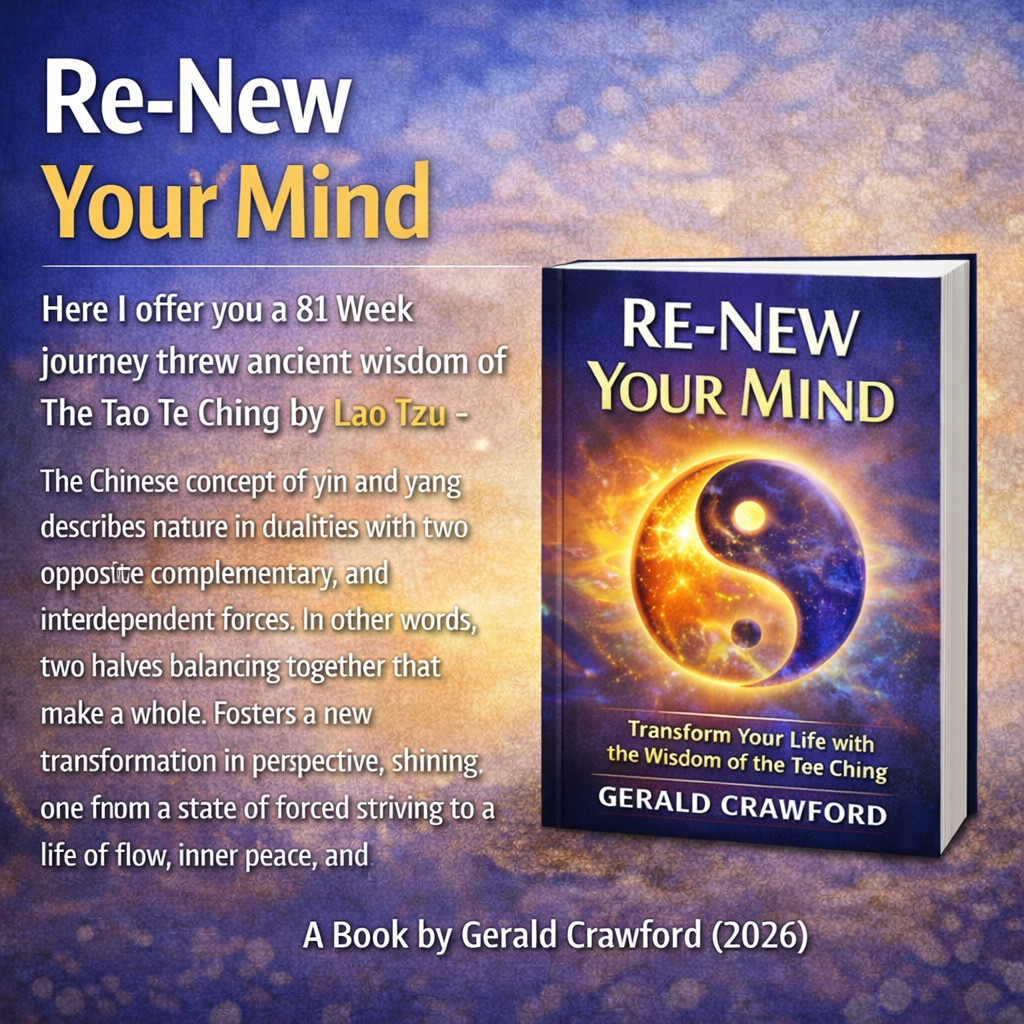
Re-New Your Mind Course by Gerald Crawford – 81 Part Course to Re-New Your Mind – Tao Te Ching – The Chinese concept of yin and yang describes nature in dualities with two opposite, complementary, and interdependent forces. In other words, two halves balancing together that make a whole.


Recent Comments