Case Study 201
Applying Re-New Your Mind in a Healing Therapy Model
Inspired by the Wisdom of the Tao Te Ching
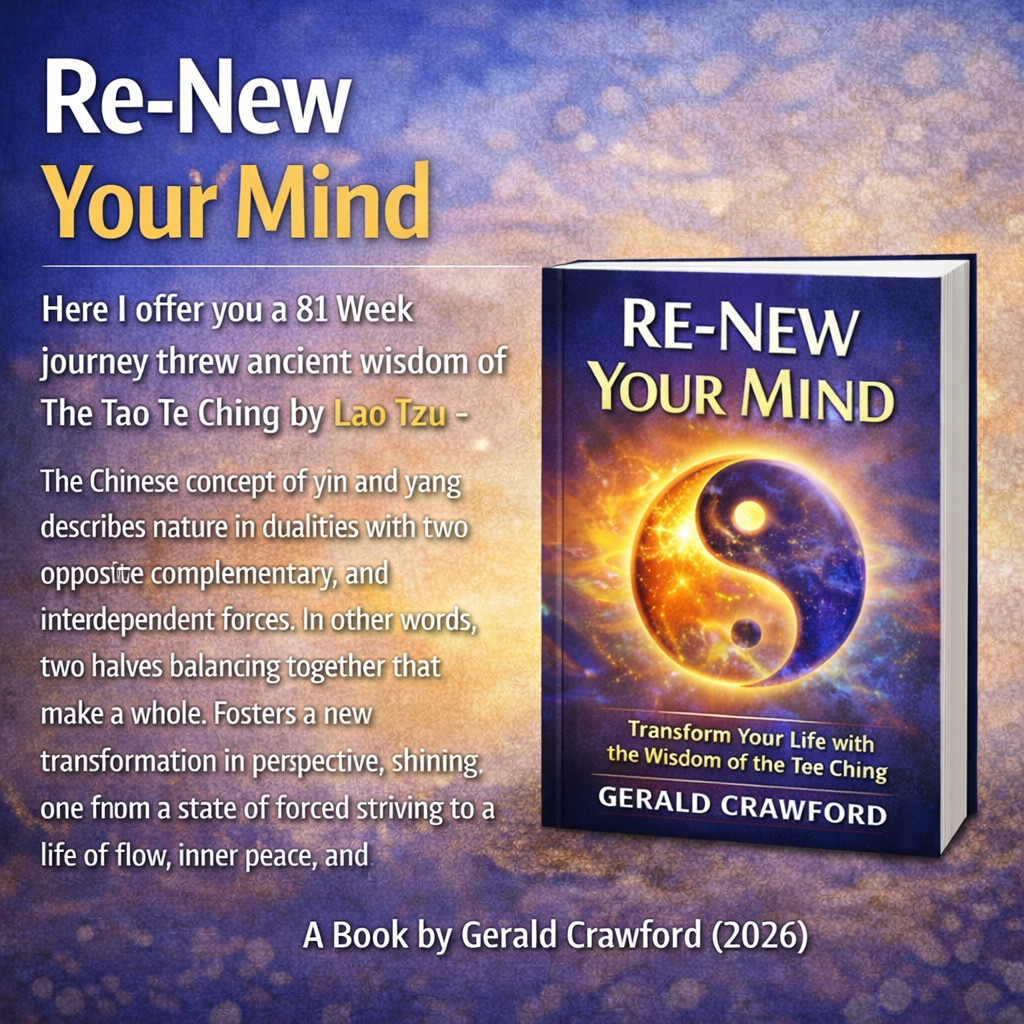
Book: Re-New Your Mind
Author: Gerald Crawford (2026)
Overview
This case study demonstrates how the principles from Re-New Your Mind, inspired by the ancient wisdom of the Tao Te Ching, can be applied within a therapeutic framework to support emotional healing, mental clarity, and personal balance.
The model integrates Taoist philosophical concepts—particularly yin and yang balance, awareness, stillness, and natural flow—into a structured healing approach designed to help individuals shift from emotional resistance and mental strain toward greater harmony and self-understanding.
Client Background
Client Profile:
Male, age 38
Occupation: Small business owner
Primary Challenges:
-
Chronic stress and mental overload
-
Difficulty switching off from work
-
Feelings of pressure and constant striving
-
Lack of inner calm
The client reported feeling as though life was a continuous struggle requiring constant effort and control.
Presenting Problem
The client described experiencing:
-
Persistent mental tension
-
Difficulty relaxing or being present
-
A belief that success required constant pressure and effort
-
Emotional fatigue and reduced life satisfaction
This pattern reflected a mindset dominated by force and striving, rather than balance and flow.
Therapeutic Framework
The therapeutic intervention was structured using principles from Re-New Your Mind, focusing on:
-
Perspective Renewal
-
Yin–Yang Balance
-
Mental Stillness and Observation
-
Alignment with Natural Flow
-
Gradual Mindset Transformation
Each step corresponded with reflective exercises inspired by Taoist teachings.
Stage 1: Awareness and Observation
The first stage encouraged the client to observe their thoughts and emotional responses without judgment.
Using reflections inspired by the Tao Te Ching, the client explored how their belief in constant striving created unnecessary internal pressure.
The client began journaling observations about moments of stress and how they reacted to them.
Outcome:
The client developed greater awareness of their thought patterns and began recognizing how their mindset contributed to their stress.
Stage 2: Understanding Yin and Yang
The client was introduced to the concept of yin and yang as complementary forces that create balance.
In therapy sessions, examples were explored:
-
Action and rest
-
Strength and softness
-
Effort and patience
The client began recognizing that success and well-being require both activity and recovery.
Outcome:
The client started incorporating intentional rest and reflection into their daily routine.
Stage 3: Releasing the Need to Force Outcomes
Using Taoist principles such as Wu Wei (effortless action), the client explored how forcing outcomes often increased frustration and tension.
The therapeutic work focused on:
-
Responding rather than reacting
-
Allowing solutions to emerge through clarity rather than pressure
Outcome:
The client reported feeling less overwhelmed and more confident in decision-making.
Stage 4: Cultivating Stillness
Weekly reflective exercises were introduced to help the client develop mental stillness.
These included:
-
Quiet reflection periods
-
Mindful breathing
-
Observing thoughts without engaging them
This helped the client experience moments of calm that were previously unfamiliar.
Outcome:
The client reported improved emotional regulation and reduced anxiety.
Stage 5: Living in Flow
As therapy progressed, the client began integrating Taoist ideas of flow and harmonious action.
Instead of reacting to every challenge with urgency, the client practiced stepping back, observing the situation, and responding thoughtfully.
Outcome:
The client reported improved work-life balance, greater patience, and a more relaxed approach to challenges.
Results
After several months of applying the Re-New Your Mind framework, the client experienced:
-
Reduced stress levels
-
Increased emotional awareness
-
Greater ability to pause before reacting
-
Improved decision-making clarity
-
Enhanced sense of balance in daily life
Key Insight
The most significant shift occurred when the client realized that success and peace are not created through constant force, but through balance, awareness, and alignment with the natural flow of life.
Therapeutic Implications
This case study illustrates how philosophical teachings from the Tao Te Ching can be integrated into a modern therapeutic model to support:
-
Emotional healing
-
Stress management
-
Perspective transformation
-
Personal growth
Conclusion
Re-New Your Mind offers a reflective framework that can complement therapeutic practices by helping individuals rethink how they approach challenges, balance their internal energies, and cultivate a more harmonious relationship with life.
Through gradual awareness and reflection, clients can move from a mindset of constant striving toward one of clarity, balance, and flow.


Recent Comments