Case Study 206
Applying Re-New Your Mind in an Addiction Healing Therapy Model
Inspired by the Wisdom of the Tao Te Ching
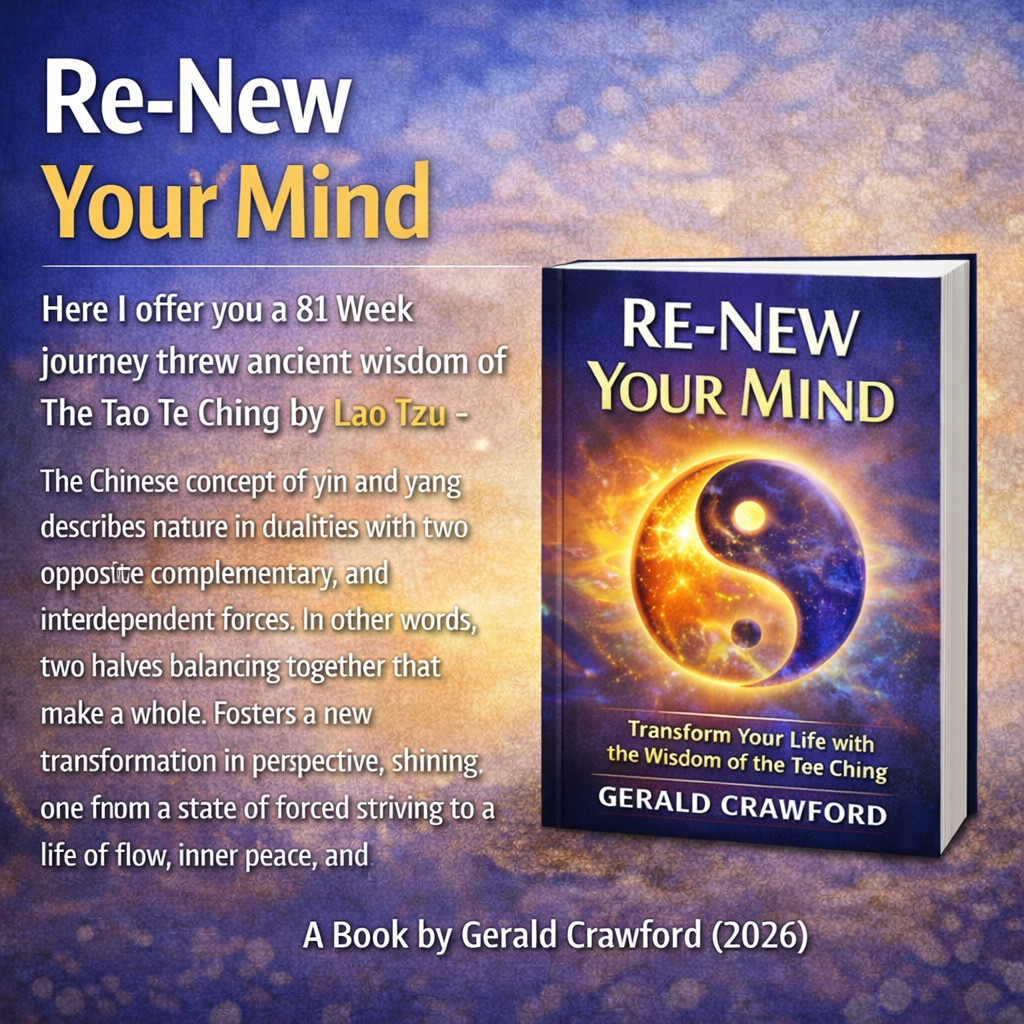
Book: Re-New Your Mind
Author: Gerald Crawford (2026)
Overview
This case study explores how the principles outlined in Re-New Your Mind, inspired by the wisdom of the Tao Te Ching, can support individuals recovering from behavioral addiction. The healing model emphasizes restoring inner balance, awareness, and self-regulation, rather than focusing solely on eliminating the addictive behavior.
Addiction often arises when individuals attempt to manage emotional discomfort through external coping mechanisms. Taoist philosophy encourages a return to natural balance, acceptance, and mindful awareness, helping individuals reconnect with themselves and develop healthier responses to stress and emotional triggers.
Client Background
Client Profile:
Female, age 32
Occupation: Administrative assistant
Presenting Challenges:
-
Compulsive social media and online usage
-
Difficulty focusing on daily responsibilities
-
Sleep disruption due to late-night phone use
-
Increased anxiety and comparison with others
The client reported spending excessive time on social media as a way to escape feelings of loneliness and dissatisfaction.
Presenting Problem
During the initial sessions, the client described:
-
Difficulty controlling the urge to check social media
-
Constant comparison with others’ lifestyles
-
Reduced productivity at work
-
Feelings of guilt and frustration after extended online use
The addictive pattern reflected a cycle of emotional discomfort, digital escape, temporary distraction, and emotional dissatisfaction.
Therapeutic Framework
The addiction healing model integrated reflections from Re-New Your Mind using five Taoist-inspired stages:
-
Recognizing Habitual Patterns
-
Understanding Emotional Triggers
-
Restoring Balance Between Mind and Environment
-
Cultivating Awareness and Self-Control
-
Reconnecting with Meaningful Life Activities
The focus was on gradually renewing the client’s perspective and relationship with technology.
Stage 1: Recognizing Habitual Patterns
The client was encouraged to observe her daily habits without judgment.
Through reflective journaling, she identified key triggers for excessive phone use, including boredom, loneliness, and moments of stress.
Outcome:
The client became aware of how automatic the behavior had become.
Stage 2: Understanding Emotional Triggers
Using the Taoist principle of awareness, therapy sessions explored how emotional discomfort often triggered the urge to escape into digital distraction.
The client began recognizing how comparison and external validation were influencing her emotional state.
Outcome:
She developed a clearer understanding of how her emotions and online behavior were connected.
Stage 3: Restoring Balance
The concept of yin and yang was introduced to illustrate the importance of balancing stimulation with stillness.
The client explored how constant digital stimulation disrupted mental calm and personal focus.
Practical steps included:
-
Creating device-free periods during the day
-
Limiting social media usage
-
Introducing quiet reflection time before bed
Outcome:
The client reported improved sleep and reduced mental restlessness.
Stage 4: Cultivating Awareness and Self-Control
The therapy model introduced mindfulness-based practices to strengthen self-regulation:
-
Pausing before reaching for the phone
-
Practicing mindful breathing when urges arose
-
Observing emotional states without reacting immediately
Outcome:
The client experienced fewer impulsive phone-checking behaviors.
Stage 5: Reconnecting with Life Balance
In the final stage, the client focused on activities that created a healthier sense of fulfillment.
These included:
-
Spending more time outdoors
-
Reconnecting with friends and family
-
Engaging in hobbies that encouraged creativity and presence
The Taoist idea of living in harmony with life’s natural rhythm helped the client shift from digital distraction toward more meaningful experiences.
Outcome:
The client reported feeling more present and emotionally balanced.
Results
After applying the Re-New Your Mind addiction healing framework, the client experienced:
-
Reduced compulsive social media use
-
Improved sleep quality
-
Greater awareness of emotional triggers
-
Increased focus and productivity
-
A stronger sense of personal balance
Key Insight
The client realized that her digital addiction had been an attempt to fill emotional gaps through external stimulation.
By renewing her mindset and restoring balance between activity and stillness, she discovered healthier ways to manage emotions and engage with life.
Therapeutic Implications
This case study demonstrates how Taoist philosophy can support behavioral addiction recovery by encouraging:
-
Awareness of unconscious habits
-
Emotional acceptance without escape behaviors
-
Balanced interaction with technology
-
Reconnection with meaningful real-world experiences
Conclusion
The reflective teachings in Re-New Your Mind offer a valuable perspective for addressing modern behavioral addictions.
By applying the ancient wisdom of the Tao Te Ching, individuals can gradually move away from cycles of distraction and dependency toward greater awareness, balance, and mindful living.


Recent Comments